Dairy Queen Blizzard Sizes Explained: Ounces, Prices, and Which One to Order

BLIZZARD SIZES. WHICH ONE ACTUALLY FITS YOUR SITUATION
I already have a post that ranks Blizzard sizes by cost per ounce. This one is a different question on purpose. Knowing the Large is the best value doesn’t help much if a Large is more Blizzard than you actually want. This is about matching the size to the situation you’re actually in, not which one wins on paper.
The four sizes, in terms you can actually picture
Ounce counts don’t mean much until you compare them to something you already know the size of. So here’s what each Blizzard size is actually close to in volume:
- Mini (6 oz): close to a small yogurt cup, or a standard coffee mug filled about three-quarters full.
- Small (12 oz): a full standard coffee mug, or a bit more than a can of soda.
- Medium (16 oz): a full pint, the same volume as a standard to-go soup container.
- Large (21 oz): most of a quart, noticeably more than a pint and a half.
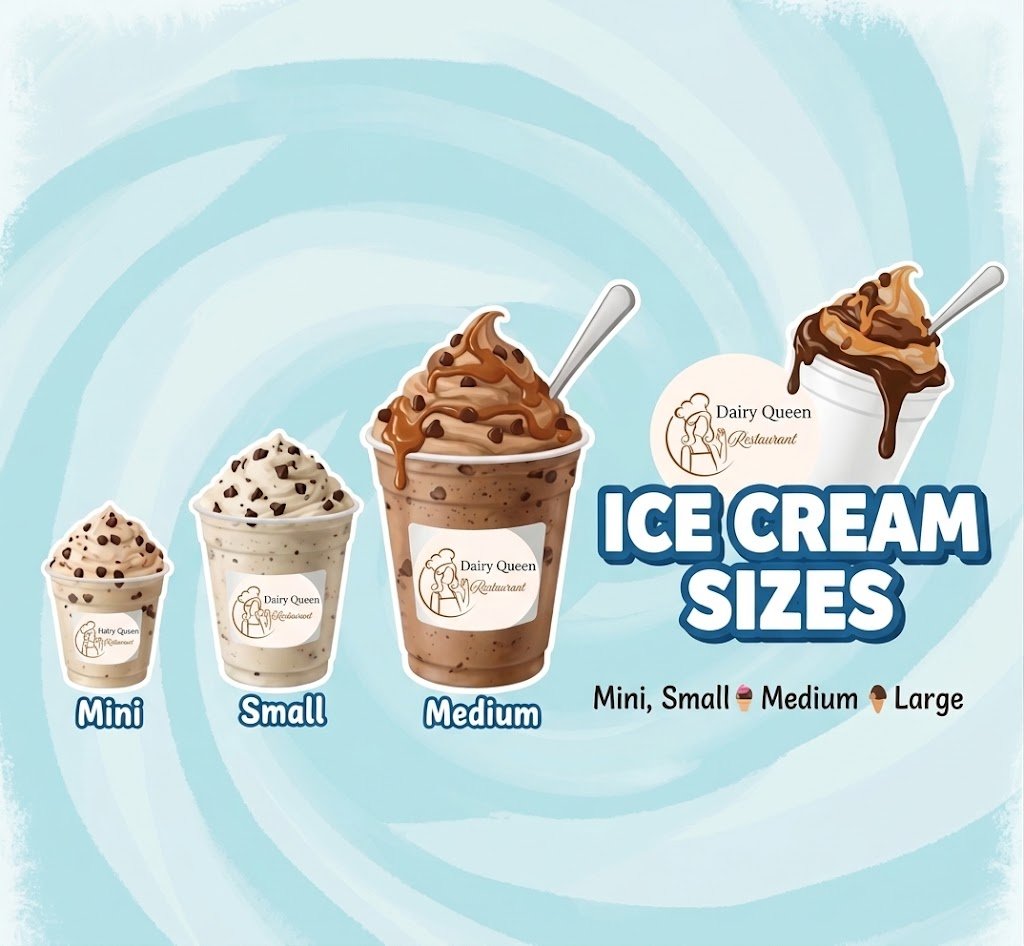
That Mini-to-Large jump is bigger than it looks on a menu board listing four sizes in a row. A Large isn’t a slightly bigger Mini, it’s three and a half times the volume. Picturing a coffee mug next to a quart container is a better gut check than any number on a price list.
Match the size to what you’re actually doing
Grabbing a quick treat between errands, not a full dessert stop: Mini. It’s sized to be finished in a few minutes without committing to a sit-down amount of ice cream, and at 6 ounces it won’t derail whatever you’re doing next.
This is your dessert after a meal, not a meal on its own: Small or Medium, depending on how much room you actually have left. Small is the more common choice here, enough to feel like a real dessert without being heavier than the meal you just ate.
Blizzard is the whole point of the trip, not an add-on: Medium is where I’d land for one person. It’s substantial without tipping into “I probably should have shared this” territory the way a solo Large sometimes does.
Genuinely sharing with one other person: Large, split, works out to close to a Medium each, and costs less than buying two Mediums separately. If you’d rather not split a single cup, two Minis or two Smalls keeps things separate without much of a price penalty.
Ordering for a kid: Mini, consistently. It’s the one size actually built for a smaller appetite rather than a downsized version of an adult portion, and it keeps a treat from turning into more ice cream than a kid can realistically finish.
Watching your overall calories for the day: Mini reliably stays under 500 calories regardless of flavor. Small mostly does too, but the richer flavors can push toward the upper end of its range and nudge past 500, so it’s not quite as automatic a cutoff as Mini. Medium and Large both regularly clear 600 to 800 depending on what’s blended in, worth knowing before you order if that’s a factor for you.
Ordering for a group of three or more: this is where per-person math actually favors buying separate Mediums rather than trying to split one large size three or four ways. A single Large split three ways gives everyone about 7 ounces, barely more than a Mini each, and loses the appeal of a properly sized Blizzard entirely. Three individual Minis or Smalls, or Mediums if the group actually wants a full-size treat each, keeps everyone’s portion intact instead of cutting one cup into awkward, unevenly-scooped thirds.
The one-size-fits-most answer, if you want a default
If none of the situations above match yours and you just want a reasonable default, Medium is the one I’d point to. It’s the size DQ built its core lineup around, most of the named signature flavors are sold specifically as Mediums, and it sits at the point where you get a genuinely full-size dessert without the “did I really need this much” feeling that a solo Large can bring on. It’s also the size where the per-ounce value starts to look meaningfully better than the smaller two, without needing to go all the way to a Large to get there.
What actually changes between sizes besides volume
The mix-in ratio stays proportional as sizes go up, a Large isn’t diluted Blizzard, it’s the same ratio of mix-ins to soft serve scaled up, not stretched thin. What does change is how the upside-down test holds up. DQ’s whole promise is that a Blizzard is thick enough to hand you upside down without spilling. That’s a much easier promise to keep in a 6-ounce Mini than a 21-ounce Large, so if you’ve ever had a Large feel slightly less “thick” by the last few bites, that’s less about ingredients and more about a bigger cup naturally softening a little more before you finish it.
Quick answer by size
- Mini: quick treats, kids, calorie-conscious orders.
- Small: dessert after a meal, when you don’t have much room left.
- Medium: the default, and where most named signature flavors are actually sold.
- Large: sharing, or when Blizzard is genuinely the point of the trip, not an add-on.
Frequently asked questions
What size Blizzard should I get?
It depends on the situation more than any single “best” answer. Mini for a quick treat or a kid’s order, Small for dessert after a meal, Medium as the reliable default most people land on, and Large specifically for sharing or when the Blizzard is the whole point of the stop.
How many ounces is a Dairy Queen Blizzard?
Mini is 6 ounces, Small is 12, Medium is 16, and Large is 21. For a full price and value breakdown by size, see my separate Blizzard price-per-ounce post.
Is a Medium or Large Blizzard better for one person?
Medium is the more common choice for a single person, substantial without regularly leading to leftovers. Large works well specifically when splitting with someone else, since it comes out close to a Medium each once divided.
For the full price-per-ounce value breakdown across all four sizes, see my Blizzard pricing guide, or check current flavors and pricing on the full menu page.